
Testing Standard For Photoelectric Performance Of LED screen
Photoelectric performance is particularly important for LED products, so do you know what photoelectric performance LED products have? Now let's learn about the testing standards of photoelectric performance of LED products.
1. electrical characteristics
The electrical characteristic parameters of LED include forward current, forward voltage, reverse current and reverse voltage. This test is usually carried out by using voltmeter and ammeter, under the condition of constant current and constant voltage supply. The maximum allowable forward voltage, forward current, reverse voltage and current can be obtained by testing the electrical characteristics of the LED. In addition, the optimum electrical power of the LED can be obtained.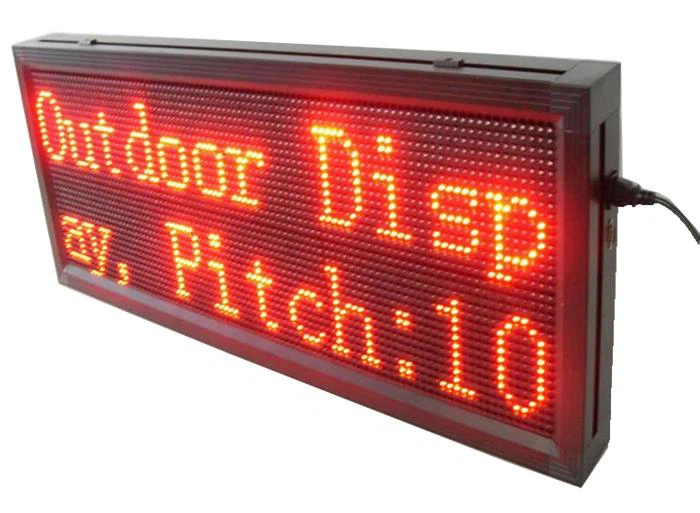
2. light characteristics
It mainly includes luminous flux and luminous efficiency, light intensity and intensity distribution characteristics and spectral parameters.
Luminous flux and luminous efficiency: there are usually two methods, integrating sphere method and variable angle photometer. Although the latter is the most accurate, it takes the long time to use the former. When the integral sphere method is used for testing, the measured LED can be placed in the center of the sphere or placed on the wall of the ball. After measuring the luminous flux, the luminous efficiency of the LED, that is, the luminous efficiency, can be measured with the electric parameter tester.
Distribution Characteristics of Light Intensity and Light Intensity: Because the light intensity distribution of LED is not consistent, its test results vary with the test distance and the size of detector aperture, so that each LED can be tested and evaluated under the same conditions, so the results are more accurate.
Spectral parameters mainly include peak emission wavelength, spectral radiation bandwidth and spectral power distribution. The spectral characteristics of LED can be expressed by spectral power distribution, and the chromaticity parameters can be obtained by spectral power distribution. Generally, the measurement of spectral power distribution needs to be carried out by spectroscopy, and the monochromatic light in the mixed light can be separated one by one, and the spectroscopy can be realized by prism and grating.
3. switching characteristics
It refers to the changing characteristics of light, electricity and color in the instant of power-on and power-off of LED. Through this test, the working state and material properties of LED can be obtained at the instant of power-on and power-off, so as to understand the loss of LED caused by power-on and power-off.
4. color characteristics
There are chromatic coordinates, main wavelengths, color purity, color temperature and color rendering, the test methods are spectrophotometry and integral method.
Spectrophotometric method: Spectral power distribution of LED was measured by monochromator spectrophotometer, and then the corresponding chromaticity parameters were obtained by integrating the chromaticity weighting function.
Integral method: the chromaticity parameter is directly measured by using a specific filter and photoelectric detector.
5. thermal characteristics
Also refers to the thermal resistance and junction temperature, thermal resistance refers to the temperature difference along the heat flow channel and the power dissipated in the channel ratio, junction temperature refers to the temperature of the LED PN junction. There are two methods to measure the junction temperature of LED. One is to measure the surface temperature of LED chip by using infrared thermometer microscope or miniature thermocouple. The other is to determine the junction temperature by determining the inverse ratio between the forward bias voltage and junction temperature under the current.
