
OLED, QLED, Micro Led display technology is struggling, and 2019 may be a watershed
Who is the OLED / QLED / MicroLED ?? 2019 may see. * In the past five years, the display technology has developed rapidly. In 2018, it came to a node for the development of display technology. A variety of display technologies including OLED, QLED, and Micro Led display technology are fighting for battle Technology vigorously leads the revolution in the entire display field.
Stimulated by market demand, 2019 will surely continue the situation of many new TV technology disputes. The development of display technology will never stop. Will the upcoming 2019 be a year for them to win or lose? Who should we choose for our consumers? Let's listen to the authors one by one.
OLED * Self-luminous technology in the consumer market
It must be said that the hot display technology in recent years belongs to OLED. With its own natural advantages, OLED has gained quite a high degree of attention for itself, and has also completed many technical problems that LCD cannot achieve. For a while, OLED was known as a synonym for future display technology. Judging from the development trend of OLED, this statement is not incorrect.
OLED TV took the lead in making breakthroughs in the high-end TV market. According to IHS data, OLED TVs accounted for 70.3% of the global high-end TV market of more than $ 2,500, demonstrating the best advantage in the high-end market. OLED not only satisfies consumers' demand for high-end quality life, but also enables TV manufacturers and channel vendors to obtain higher value.
In the domestic TV market, compared with the bleak overall market in 2018, OLED has achieved growth against the trend. LGD expects to ship 4 million screens throughout the year, an increase of 135% year-on-year. Capacity development can only make up for the market needs. The very different circumstances express the market's expectation for better implementation of new technologies.
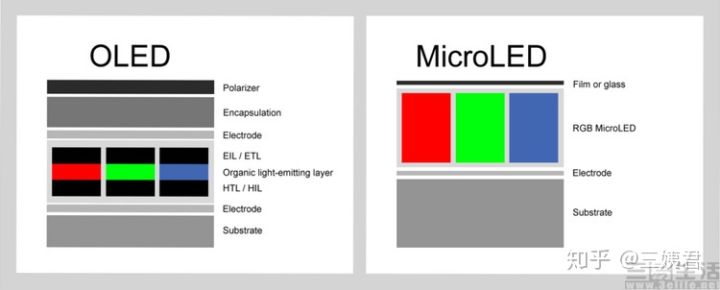
Currently, the performance of OLED TVs in the global and Chinese high-end TV market is very prominent. Chinese manufacturers Skyworth, Konka, Changhong, foreign companies such as LG, Sony, Panasonic, Philips, Metz, Grundig, Vestel, Olufsen, B & O, etc. have all launched OLED TV products. * It's even more exciting for the OLED industry. Sony returned to the embrace of OLED technology in 2017. In the upcoming CES 2019, Sony may once again launch exciting new products for OLED TVs.
Moreover, according to LG Display, LG Display is working hard to increase the production capacity of OLED TV panels to meet the high-end market demand. LG Display currently has three production lines, and the 10.5-generation plant (P10) is about to be completed. The display industry zone in Guangzhou, China, has also begun construction of a new OLED production line. As demand expands, LG Display will continue to invest in new production lines. In the context of increasing production capacity, OLED TV prices are gradually lowering, 2019 may be the spring of OLED.
Samsung may push QD-OLED to seek a higher breakthrough in QLED technology
In terms of physical properties, inorganic light-emitting materials are more stable than organic light-emitting materials of OLEDs. QLED, as a stable inorganic crystal, has higher luminous purity than organic molecules and inorganic phosphors. Its stability is comparable to inorganic phosphors, but its processing performance is the same as that of organic molecules. QLED can improve the color gamut of TV to 1 billion kinds of rich colors, showing vivid and shocking picture quality, and at the same time lower manufacturing cost than OLED.
The prospect of QLED display technology is bright, but at this stage it is still light quality (requires backlight). According to industry conservative estimates, it is expected that it will be 4 to 5 years before electric light emission (self-luminescence) is possible, and OLED is naturally self-luminous. The potential for picture quality and form is huge. Although Samsung has actively deployed QLED technology and its enthusiasm for QLED research and development has never diminished, the perfect self-luminous QLED product has not appeared.
So in the second quarter of this year, Samsung officially announced the next phase of quantum dot development as QD-OLED, demonstrating Samsung ’s ambition to create a new quantum dot technology route.
QD-OLED technology is a combination of quantum dot technology and OLED technology, using a blue OLED light-emitting layer and a quantum dot layer on top, by converting light into red and green to achieve full color.
Samsung's move is to get rid of the dependence on LG Display on large-size OLED panels. At present, LGD adopts the WRGB architecture, which is currently the most feasible mass production method. Samsung ’s QD-OLED architecture goal still has many technical challenges, such as high-efficiency and long-life blue OLED emitters, and inkjet printing of quantum dots.
According to DSCC, Samsung will start trial production of QD-OLED in 2019, with 5000 pieces of 8.5 generation substrates per month. If successful, Samsung will double its production capacity by 2020 and add another 30,000 substrates per year in 2021 and 2022. Samsung ’s QD-OLED TV material revenue will reach US $ 56 million in 2022.
Since 2017, many TV manufacturers including Sony have joined the OLED camp, which also makes the future trend of the TV market become more and more clear. Samsung has always insisted on seeking a higher breakthrough in quantum dot technology. If QD-OLED technology can be commercialized in the future, it is believed that it will inject new vitality into the entire TV industry and will also bring greater OLED technology. pressure.
Micro Led technology is difficult to mass-produce mass production, and can only be used as a dazzling technology for manufacturers
Since Samsung launched Micro LED TV at this year's CES2018, the industry generally believes that the new competition in the future display field will become the battlefield of OLED and Micro LED.
Samsung's 146-inch "The Wall" Micro LED TV and LG brought a 175-inch Micro LED TV at the IFA exhibition. Their appearance is very shocking. Some people even think that Micro LED will carry the banner of future home entertainment.
The reason why Micro LED is favored by few people in the industry is that, as it is the same as OLED, it is a self-luminous display technology. In addition to the characteristics of high brightness, super high resolution, color saturation, and high luminous efficiency, Micro LED is more important. It will not be affected by water vapor, oxygen or high temperature, so it has obvious advantages in stability, service life, working temperature and so on.
Therefore, manufacturers like Apple, Samsung, Hon Hai, LG Display, Oculus, etc. are all busy with layout.
However, the volume of Micro LED products has not landed. Apple has even applied for more than 40 Micro LED related patents, and Apple Watch Series 4 will be equipped with Micro LED in rumors, and OLED is still used.
As early as 2012, Sony Crystal LED Display *, which is considered to meet the Micro LED standard, came out. But in the years since then, at least on the product side, Sony has not been a big fan of this technology. Because Sony has always been cautious about new technologies, such as OLED, although OLED TVs were introduced in 2007, they were only formally mass-produced after last year ’s OLED industry chain matured, indicating that they now feel that OLED display technology has reached mature Stage, and the same is true for Micro LED Sony.
It can be seen that the mass production of Micro LED may be greatly restricted at the technical level, so that it may only be used as a dazzling technology by manufacturers, which is actually meaningless for our consumers.
Although OLED, QLED, and Micro LED are all self-luminous technologies, QLED has not been able to truly realize self-luminescence so far due to many uncertainties and imperfections in the process; although Micro LED technology has been demonstrated by many manufacturers, However, it still faces the problems of full color, production yield, heat dissipation and consistency of emission wavelength. I am afraid it will take some time before the mass production of the product. OLED is currently a self-luminous technology that is currently in the consumer market and has obvious advantages. 2019 may be an important node in the dispute in the field of display technology. Who will carry this banner after the end? Let us wait and see.