
With the sudden outbreak of the epidemic, some vertical categories that are not normally concerned about have become popular. Masks, goggles, disinfectant water and other materials related to epidemic prevention and control have become popular goods. Through this epidemic, the whole society has enhanced health awareness, and the status of disinfection and cleaning industry in protecting people's life and health has undoubtedly been improved. Among them, ultraviolet sterilization, as a means of disinfection and protection, has quietly accelerated the pace of growth due to the epidemic situation.
In order to prevent and control the epidemic situation, how to play a role in ultraviolet sterilization lamp, what direction will the ultraviolet sterilization technology evolve in the future, and what puzzles the application level of ultraviolet sterilization face? In view of these problems, the reporter recently interviewed a number of experts and industry insiders.
Fight "epidemic": ultraviolet rays can effectively inactivate covid-19
Ultraviolet disinfection is an old and effective method. Sun drying quilt is the most primitive use of ultraviolet to remove mites, disinfection and sterilization.
During the SARS period, experts from the Institute for viral disease control and prevention of the Chinese Center for Disease Control and Prevention found that the SARS virus could be killed by irradiating the coronavirus with ultraviolet rays of more than 90 μ w / cm2 for 30 minutes. "Covid-19 infection pneumonia diagnosis and treatment program (trial version of the Fifth Edition)" points out that covid-19 is sensitive to ultraviolet radiation. Recent studies have found that covid-19 is associated with SARS coronavirus. Therefore, scientific and rational use of UV can effectively inactivate covid-19.

Li Jinmin, director of the State Key Laboratory for semiconductor lighting joint innovation and a researcher at the Institute of semiconductors, Chinese Academy of Sciences, said that the principle of ultraviolet disinfection and sterilization is to use high-energy ultraviolet light to break the double helix of DNA, so as to inactivate bacteria and viruses.
It is understood that compared with chemical sterilization, the advantage of ultraviolet radiation is that the sterilization efficiency is high, the inactivation is generally completed in a few seconds, and no other chemical pollutants are produced. Because of its convenient operation and being suitable for all spaces, UV germicidal lamp has become a hot item in the major e-commerce platforms. In the front-line medical and health institutions, it is also an important sterilization equipment.
Taking Wuhan as an example, local medical institutions need more UV lamps
King Jin (China) told reporters that not only in hospitals, ultraviolet germicidal lamps can also inactivate microorganisms. The ultraviolet water purification system can be installed in the family to purify water. The air purifier equipped with ultraviolet lamp can treat the floating bacteria in the air harmlessly.
Deep UV LED, a predictable emerging industry
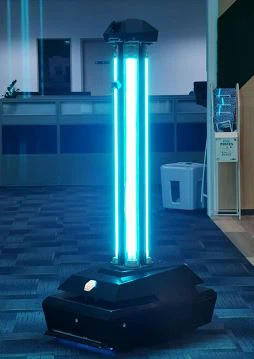
It is necessary to meet certain requirements for effective sterilization by ultraviolet rays. Attention should be paid to the wavelength, dose and time of ultraviolet light source, Li said. That is to say, it must be UVC wave band with wavelength below 280nm. Different bacteria and viruses must meet certain irradiation dose and time, otherwise it can not be inactivated.
According to Yan Jianchang, a researcher at the Institute of semiconductors, Chinese Academy of Sciences, according to the wavelength division, the ultraviolet band can be divided into UVA, UVB and UVC. "UVC is a band with the shortest wavelength and the highest energy. In fact, the most effective band for sterilization is UVC, which is called deep ultraviolet." He said.
At present, mercury lamp is widely used in civil and industrial fields. Due to the significant impact of mercury on human society and environment, the Minamata convention, which limits the use and emission of mercury, has officially entered into force. The production and use of traditional mercury lamps will be restricted, prohibited and gradually withdrawn from the market. It is an important challenge to develop a new environment-friendly and efficient UV light source. Deep ultraviolet LED based on GaN wide band gap semiconductor material becomes the best choice for this new application. This all solid-state light source has the advantages of small size, high efficiency and long life. The chip module only the size of thumb cover can emit ultraviolet light stronger than mercury lamp.
Mr King believes that the application of deep ultraviolet LED instead of traditional mercury lamp in disinfection and sterilization is similar to that of white LED in lighting field, which will form a huge emerging industry.